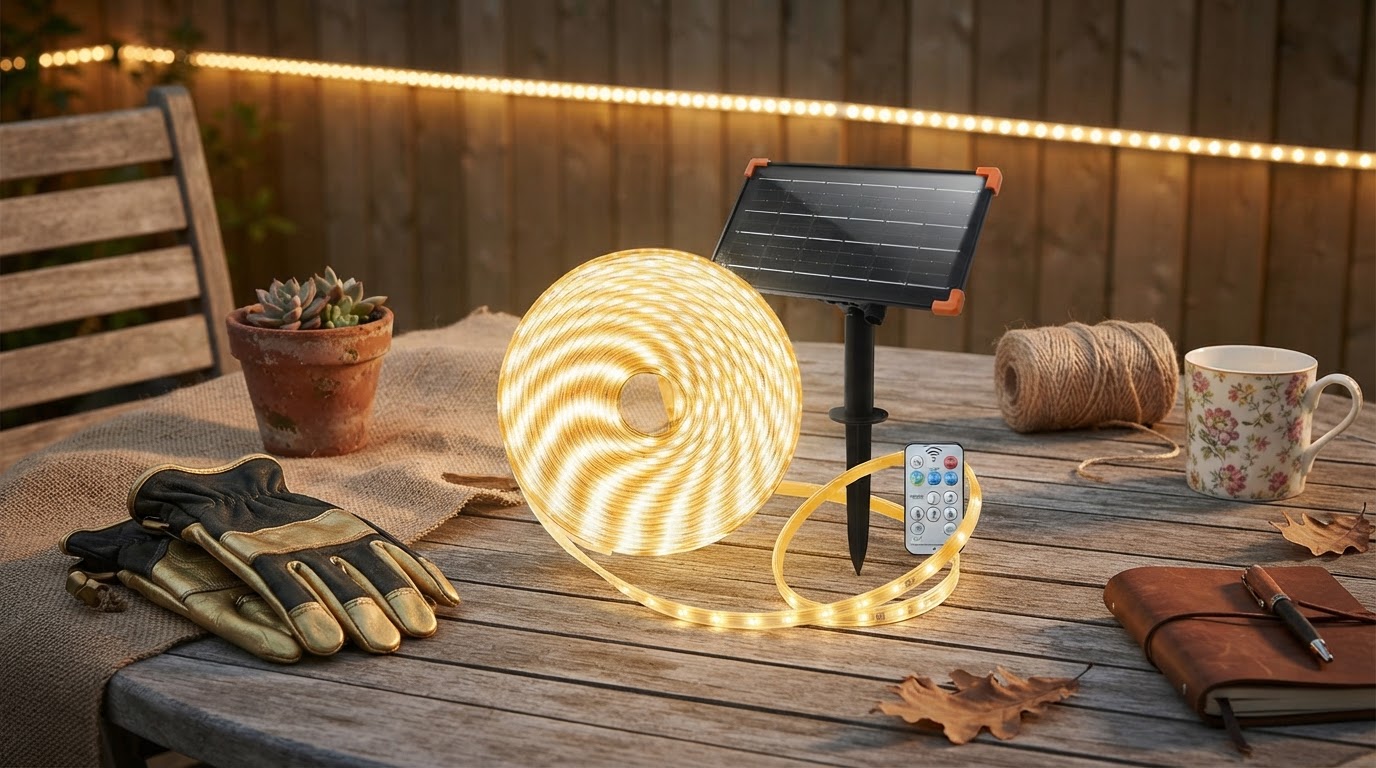
Solar LED Strip Lights for Enhancing Garden Fences
 Sam VasquezBuying Guide Lead
September 22, 2026. This guide examines the technical requirements and aesthetic considerations for installing solar-powered lighting along residential perimeter boundaries. It is written for homeowners seeking to improve nighttime visibility and security without the complexity of hardwired electrical systems.
The Challenge of Perimeter Lighting
Illuminating a garden fence presents a unique set of obstacles compared to standard patio lighting. Unlike a central seating area, a fence line often stretches far from the home's main power source, making traditional 120V wiring expensive and disruptive to existing landscaping. Many property owners turn to solar solutions to avoid trenching cables through established root systems or under walkways. However, the quality of these systems varies significantly. According to The Spruce, which tested the 10 best outdoor solar lights of 2026, durability and weather resistance are the primary factors that determine long-term satisfaction. Cheaply made units often fail within a single season due to moisture ingress or battery degradation.
When you are looking at a long stretch of wood or vinyl fencing, the difference between a cohesive glow and a patchy mess comes down to how the light is distributed. Many people mistakenly purchase individual stake lights, which leave dark gaps and create a "runway" look that isn't particularly inviting. This is where specialized ribbon or strip formats become necessary. Before you commit to a specific hardware type, you should understand the distinction between ribbon vs strip lights for garden fences, as the mounting methods and light diffusion properties differ. If you live in a region with heavy snowfall, you also need to consider maintaining solar ribbon lights in winter to ensure the panels remain functional and the adhesive or clips don't fail under the weight of ice. Between these two concerns—durability and distribution—most garden projects fail because they underestimate the environmental stress placed on the solar controller itself.
Technical Solutions for Fence Mounting
Solar LED Strip Lights solve the perimeter problem by decoupling the energy collection from the light output. For a garden fence, this allows you to mount the LEDs in a shaded area—perhaps under a top rail or behind a decorative lattice—while placing the solar panel in a high-sunlight position at the top of a post. The search for waterproof solar powered rope lights has increased because users realize that standard indoor adhesive strips simply won't survive a single rainstorm. You need a product with a minimum rating of IP65, which ensures protection against low-pressure water jets from any direction.
If you're on a budget, you might be tempted by the generic 50-foot rolls found on discount sites, but I’ve found these often lack the necessary lumen output to actually illuminate a path. In my experience, a higher-density LED count per meter is required if you want the light to wash down the fence boards rather than just appearing as tiny dots of light. For those who want more control over the ambiance, some modern kits now include features like those seen in the 100FT Solar String Lights w/ Remote & Dimming Review on YouTube, where users can adjust brightness levels to avoid light pollution that might bother neighbors. When you are maintaining solar ribbon lights in winter, having a dimming function is actually a technical advantage; lowering the brightness can help the battery last through the longer nights when sunlight for charging is scarce. Furthermore, when deciding between ribbon vs strip lights for garden fences, consider that the flat profile of a ribbon light is much easier to secure with outdoor-rated mounting clips than a rounded rope light, which tends to sag over time.
Decision Framework for Garden Fences
Choosing the right setup requires a balance between the length of your fence and the capacity of the solar battery. Skip this if you have a North-facing fence that is completely shrouded by mature trees throughout the day; solar won't work there regardless of the brand quality. For everyone else, the goal is to find a system that offers a separate, high-efficiency monocrystalline panel. Here's what I'd actually buy: a system that uses a 3.7V lithium-ion battery rather than the older Ni-MH cells, as they hold a charge better in fluctuating temperatures. Between these two, I'd go with the lithium-ion option every time for the longevity it provides.
Before purchasing, run through this checklist to ensure the hardware fits your specific fence type:
- Verify the IP rating is at least IP65 to handle consistent rain and sprinkler systems.
- Measure the distance from the nearest sun-drenched post to the start of your light run to ensure the lead wire is long enough.
- Check if the kit includes mechanical mounting clips; do not rely on pre-applied adhesive for outdoor wood surfaces.
- Ensure the solar panel has a manual override switch for those nights when you want the garden dark.
- Look for "warm white" (2700K-3000K) color temperatures to avoid the clinical, blueish tint often found in low-end solar products.
Shop Solar LED Strip Lights here