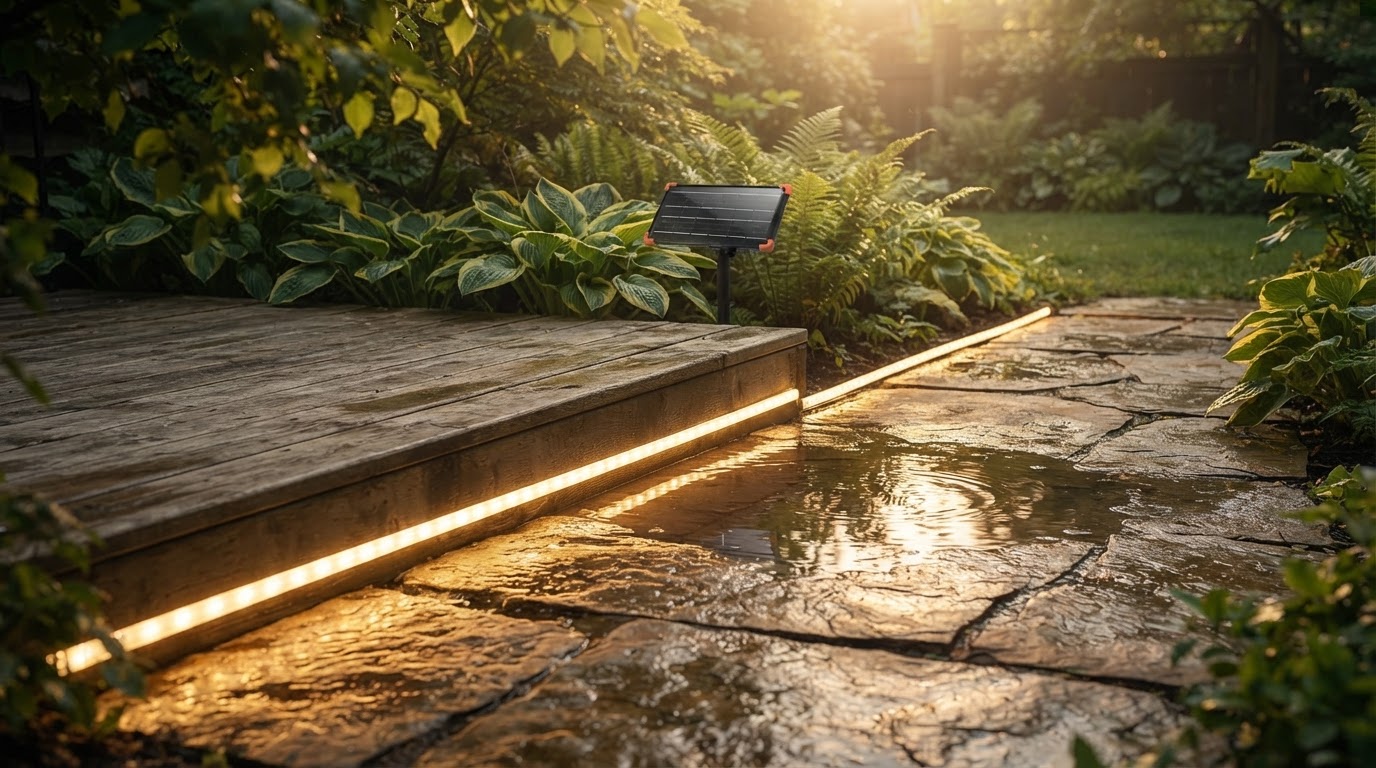
What Does IP67 Mean for Solar LED Strip Lights?
 Sam VasquezBuying Guide Lead
September 10, 2026 — An IP67 rating on Solar LED Strip Lights signifies the fixture is completely dust-tight and protected against temporary immersion in water up to one meter deep for 30 minutes.
Homeowners installing lighting on decks or garden paths often face confusion regarding "water-resistant" versus "waterproof" labels. Getting this wrong leads to short-circuited hardware during the first heavy storm, making the Ingress Protection (IP) code the most critical spec for outdoor safety installations. I see many people buy cheaper IP65 units only to have them fail when rain pools on their steps, which is why understanding the jump to IP67 matters for long-term durability.
How does IP67 protect solar step lights from water damage?
IP67 protection ensures that the internal electronics of a solar fixture remain dry even if the unit is briefly submerged, providing a significant safety margin over lower-rated alternatives. According to Insight Lighting, an IP67 rating indicates complete protection against dust and temporary immersion in water up to 1 meter deep for 30 minutes. This level of sealing is achieved through high-quality gaskets and ultrasonic welding of the plastic housing. For Solar LED Strip Lights mounted low to the ground, this is vital because heavy downpours can create temporary puddles that would drown an IP65-rated light.
Between these two, I'd go with the IP67 option every time for ground-level applications. While IP65 is fine for wall-mounted sconces under an eave, step lights are in the splash zone. If you're on a budget, you might be tempted by IP44 decorative strings, but skip this if your stairs are exposed to the elements without overhead cover. The extra cost of IP67 hardware is essentially insurance against the corrosive effects of moisture ingress. For those focusing on solar step lights outdoor waterproof solutions, the IP67 seal is the industry standard for peace of mind.
Is IP67 necessary for snow and frost conditions?
Photo by Denys Mikhalevych on Pexels
An IP67 rating is highly recommended for cold climates because it prevents moisture from melting snow from entering the housing and expanding as it refreezes. Data from LuminAID suggests that IP67 adds a stronger safety margin if your light might live in harsher environments where it could sit in pooled rain or heavy slush. When snow sits on a light, it creates a constant moisture contact point as it melts; a lower-rated seal might allow that moisture to wick into the battery compartment.
Here's what I'd actually buy: a dedicated IP67 solar step light like those from TECKNET, which are specifically built to withstand rain, frost, and snow. These units handle the pressure changes that occur during freeze-thaw cycles much better than basic tape lights. If you are planning the best placement for solar step safety lights, you have to account for where snow piles up. A light buried under a snowbank for two days needs that immersion protection once the sun comes out and the melt begins. Without that airtight seal, internal condensation will eventually cloud the lens and kill the LEDs.
Quick answers
Q: Can IP67 solar lights stay underwater permanently? A: No, IP67 is only rated for temporary immersion up to 30 minutes at a depth of 1 meter. For permanent underwater use, such as in a pond or pool, you would need an IP68 rating, which is designed for continuous submersion.
Q: What is the difference between IP65 and IP67 for outdoor strips? A: IP65 protects against low-pressure water jets from any angle, while IP67 allows the unit to be dropped into a bucket of water without failing. In practical terms, IP67 is better for areas where water pools, whereas IP65 is sufficient for vertical surfaces that shed water quickly.
Q: Do IP67 Solar LED Strip Lights require special maintenance? A: While the internal seals are maintenance-free, you should still wipe the solar panel clear of debris every 3 months to ensure the battery charges fully. The IP67 rating protects the electronics, but it does not prevent dirt or salt spray from blocking the sunlight needed for power.
Learn more about Solar LED Strip Lights at https://solarledstrip.com.
Sources
Photo by Кирилл Абрамов on Pexels
- Weather Resistant Solar Lights: Ultimate 2026 Guide - LuminAID
- Understanding IP Ratings - Insight Lighting
- Solar Light Waterproof Ratings Explained: IP65 vs IP67 vs IP68