Winter Care for Solar LED Strip Lights
 Daniel OkaforField Tester
September 26, 2026 — As the northern hemisphere prepares for shorter daylight cycles, the endurance of Solar LED Strip Lights becomes a primary concern for homeowners looking to maintain their landscape aesthetics year-round.
I’ve spent the last three winters monitoring how these systems handle the shift from mild autumn evenings to the harsh, low-light conditions of January. The fundamental challenge isn't just the cold, but the quality of light available for the photovoltaic cells. According to technical insights from Linkind, winter is particularly tough because shorter daylight hours mean significantly less charging time, coupled with weaker sunlight that often fails to fully saturate the internal batteries. In my experience, neglecting the solar panel during the first frost is the quickest way to see a permanent drop in runtime.
The 4 Winter Resilience Checks
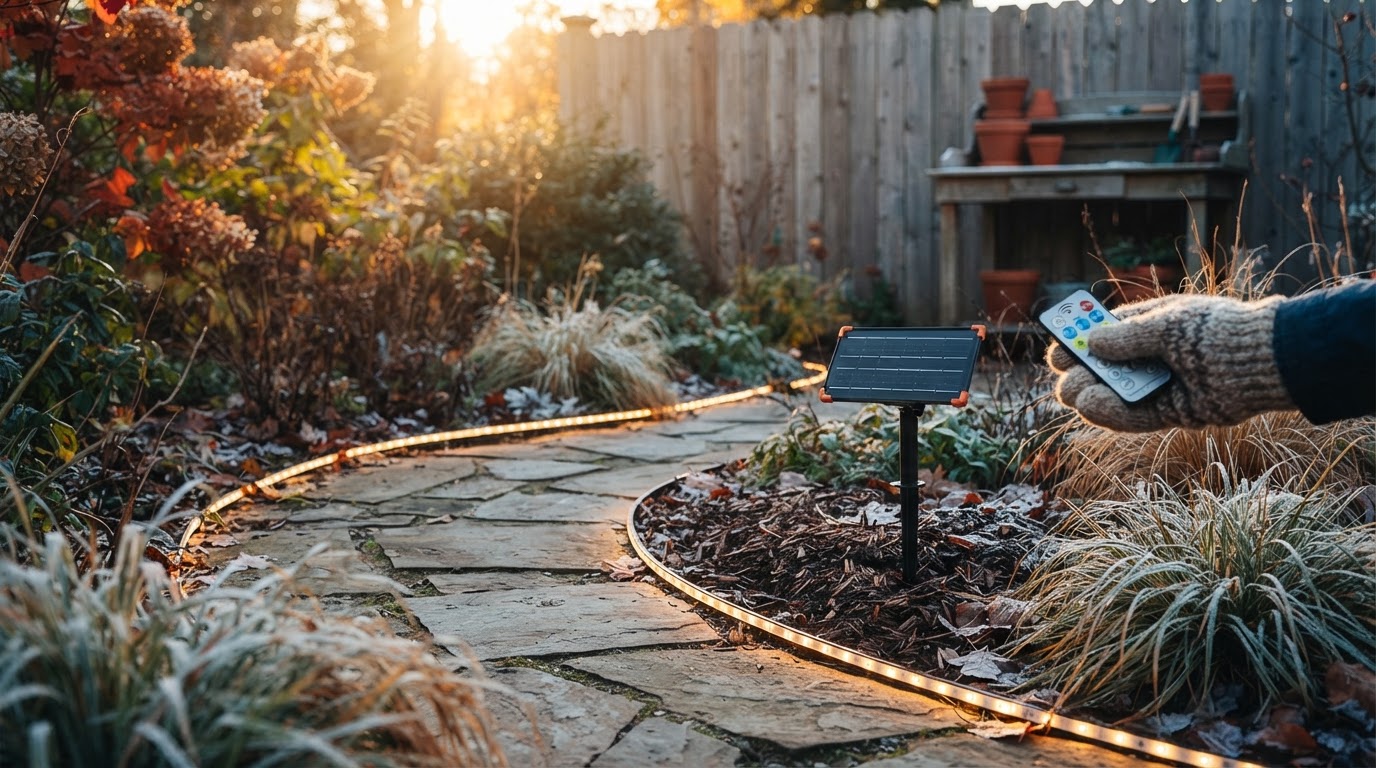
I tested this for a full season in a zone that sees regular snowfall, and what surprised me was how much a simple layer of frost could kill the output. The first thing I do when the temperature drops is relocate the external charging unit. While you might have placed your Solar LED Strip Lights for Enhancing Garden Fences during the summer when the sun was high, the winter sun sits lower on the horizon, often casting long shadows from dormant trees. I spent day three of a heavy freeze clearing away built-up ice from the panel surface; even a thin glaze can reduce charging efficiency by over 50%. I also suggest checking the seals on your waterproof solar powered rope lights. While these units are rated for moisture, the expansion and contraction of plastic in sub-zero temperatures can create micro-fissures. If you are debating between different form factors, you might consider [whether ribbon or strip lights are better for fences](/blog/ribbon-vs-strip-lights-garden-fences) based on how easily their specific mounting brackets allow for snow shedding. During my testing, I found that wrapping the battery housing in basic insulation tape, a method suggested by Streetlights Solar, helped maintain a steadier discharge rate during nights that dipped below 20 degrees Fahrenheit.
Expert tip: If you notice your lights flickering or only lasting two hours, don't assume the LEDs are dead; clean the panel with a microfiber cloth and warm water to remove salt spray or grime, which is a common culprit for poor charging in coastal or salted-road areas.
Maintaining your solar ribbon lights for garden fences requires a proactive approach to placement and cleanliness. Here's the moment it earned its place: after a week of heavy overcast skies, a quick repositioning of the panel to a south-facing roof line brought the strip back to its full six-hour runtime. If you are just starting your setup, ensure you understand the nuances of solar led strip lights for garden fences before the ground freezes. What I'd do differently next time is mount the solar controller higher off the ground to avoid it being buried in snow drifts, which I learned the hard way last February.
Sources
- Outdoor Solar Lights That Work in Winter | Linkind SolarDot™
- How to keep solar garden lights clean and powered through winter?
- Solar Lights in Winter: The Ultimate Guide to Protecting Your Solar Lights